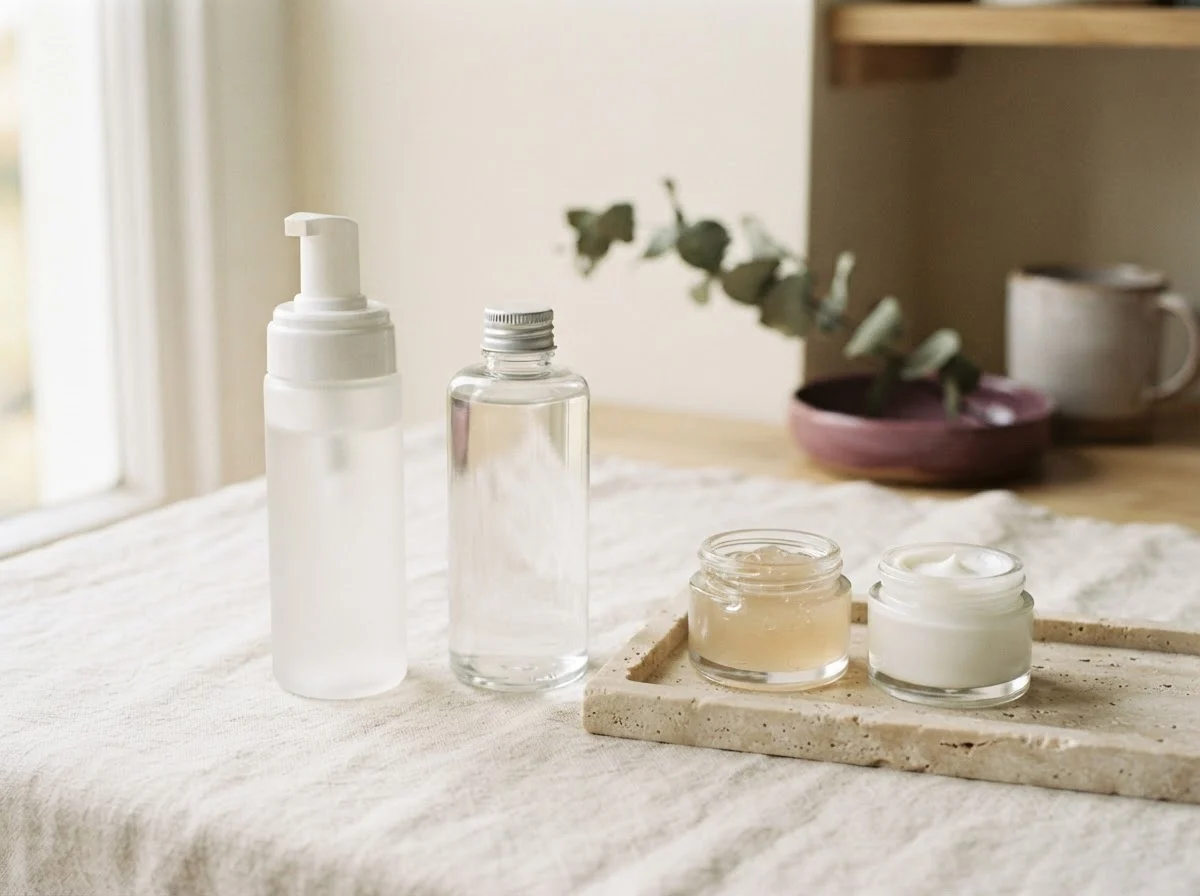
Skincare Routine for Combination Skin: How to Care for an Oily T-Zone and Dry Cheeks
If your forehead and nose look shiny by lunchtime while your cheeks feel tight after washing, you are not imagining it. A good skincare routine for combination skin does not try to force one face into one category. Instead, it keeps the basics gentle and then treats the oily T-zone and the drier cheeks a little differently. Here is a simple plan that works through a European winter and beyond.
What combination skin actually means
Combination skin usually means more oil across the forehead, nose and chin (the T-zone) and normal to dry skin on the cheeks and around the eyes. The balance can shift with the seasons: central heating and cold wind often make cheeks drier in winter, while warmer months can make the T-zone shinier. That is why a routine you can adjust zone by zone is more useful than one heavy cream or one strong mattifying product applied everywhere.
The two most common mistakes are stripping the whole face to control shine, which leaves the cheeks feeling raw, and smothering everything in a rich cream, which can leave the T-zone greasy. The aim is balance, not extremes.
A skincare routine for combination skin: morning
- Cleanse gently. A light foaming cleanser suits most combination skin because it lifts excess oil without needing to be scrubbed in. Our Cleansing Foam is a good everyday choice. Use lukewarm water, not hot, and pat dry. If you are unsure which texture to pick, our guide to the best face cleanser for your skin type compares foam, milk and micellar water.
- Tone for hydration. Press a few drops of Hydrating Toner into the whole face with your palms. It adds a light layer of moisture that the cheeks will appreciate without weighing down the T-zone.
- Moisturise by zone. This is the key step (more on it below). Use a light gel on the T-zone and a creamier texture on the cheeks.
- Protect. Finish with sunscreen every morning, even on grey days. A lightweight option such as Sunscreen SPF30 with tint gives an even finish and sits comfortably over both zones.
Evening routine
- Cleanse. If you wear sunscreen or make-up, cleanse thoroughly so nothing is left sitting in the pores of your T-zone. The same foam works well; massage it for about 30 seconds, paying a little more attention to the nose and chin.
- Tone. Repeat the hydrating toner step.
- Moisturise. Skin often feels drier in the evening, especially after a day in heated rooms, so you can be slightly more generous on the cheeks at night.
Two or three times a week you might add gentle exfoliation to the T-zone only, but go slowly and stop if your skin feels sore or tight.
Choosing a combination skin moisturiser
You do not need two completely separate routines, but having two moisturiser textures makes a real difference. Think of it as “multi-moisturising”:
| Zone | What it needs | Texture to try |
|---|---|---|
| Forehead, nose, chin | Light hydration without shine | Oil-Free Hydrating Gel or Niacinamide Gel Moisturiser |
| Cheeks, jawline | Comfort and a softer feel | Moisturising Day Cream 50 ml |
Gel textures absorb quickly and feel fresh, which makes them a natural fit for an oily T-zone. The Niacinamide Gel Moisturiser contains niacinamide, an ingredient many people with oilier skin like to include in their routine. For more on keeping oily areas hydrated without extra shine, read our guide to choosing an oil-free moisturiser.
On the cheeks, a creamier day cream helps them feel soft and comfortable, particularly when the weather turns cold. Apply it first to the drier areas, then use whatever is left on your fingertips lightly around the edges of the T-zone so there is no hard line between products.
Tips for managing an oily T-zone
- Do not over-wash. Cleansing more than twice a day can leave skin feeling tight, and many people find it does not reduce shine anyway.
- Blot, do not scrub. A clean tissue pressed on the nose at midday is kinder than another wash.
- Keep layers thin. One fine layer of gel is usually enough on the T-zone.
- Adjust with the seasons. In summer you might use the gel all over; in winter you may want cream on more of your face.
- Be patient. Give any new routine around four weeks before deciding whether it suits you.
If you notice persistent redness, flaking, breakouts that will not settle or patches that itch or sting, see a doctor or pharmacist rather than adding more products.
Frequently asked questions
Can I use one moisturiser for combination skin?
Yes, if you find a lightweight one that keeps your cheeks comfortable. Many people, however, find it easier to use a gel on the T-zone and a cream on the cheeks, especially in winter.
Should combination skin use a toner?
A hydrating toner is a gentle way to add moisture to the whole face before moisturiser. Apply it with your hands rather than rubbing with cotton pads, which can irritate drier areas.
Why is my T-zone oily but my cheeks are dry?
The T-zone naturally tends to produce more oil than the cheeks, and harsh cleansing or cold, dry indoor air can make the cheeks feel drier still. A balanced routine with zone-specific moisturising usually helps. If the dryness is severe or uncomfortable, see a doctor or pharmacist.
Ready to build your routine? Explore our face care collection.