

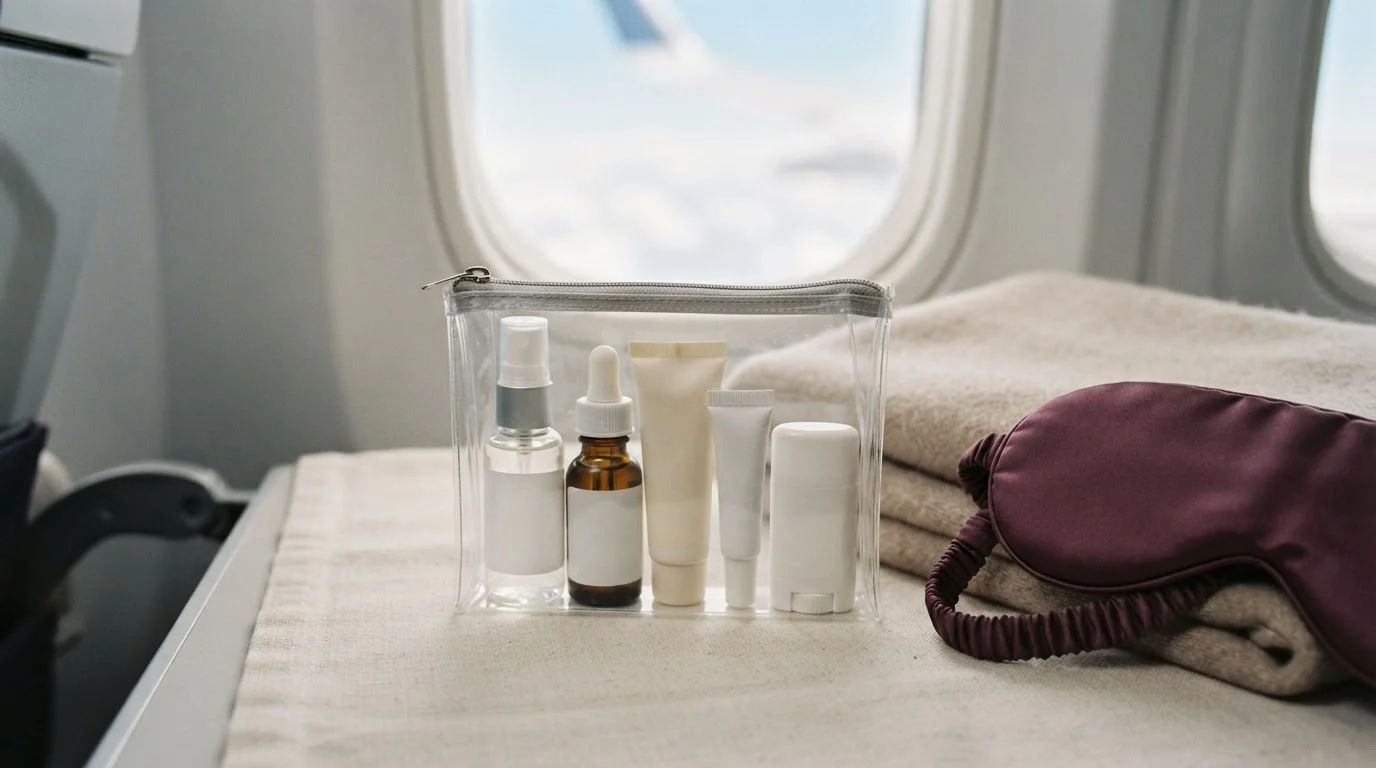
Step off a long-haul flight and your skin often tells the story before you do: tight cheeks, flaky patches around the nose, puffy eyes and a dull, tired look. The good news is that skincare for flying doesn’t need a full bag of products. A few well-chosen steps before, during and after the flight can keep your skin comfortable from take-off to arrival.
Why your skin feels so dry on a plane
Cabin air is very different from the air at home. It is recirculated and much drier than most of us are used to, so water evaporates from the surface of the skin faster than usual. Add salty snacks, a glass of wine and little sleep, and dry skin on a plane is hardly a surprise.
Even oily skin can feel tight when it’s short on water. The aim of a good travel skincare routine is simple: put water back in, keep it there, and avoid anything that might irritate tired skin.
Before you fly: prep your skin the night before
Hydrated skin copes far better with a long flight than skin that is already dry. The evening before you travel:
- Cleanse gently and skip strong exfoliants or new active products. Travel day is not the day to test something new.
- Apply a hydrating serum to slightly damp skin, then a moisturiser to seal it in.
- Drink water through the day and go easy on salty food and alcohol.
If you are unsure what goes on first, our guide to skincare routine order explains how to layer serums, creams and SPF.
Skincare for flying: what to pack in your carry-on
Keep it small and practical. Before you pack, check your airline’s and departure airport’s current liquid rules, as these vary and can change. Travel sizes and solid products make life easier. A simple in-flight kit might include:
- A face mist for a quick refresh. The Microbiome Prebiotics Face Mist adds a light layer of hydration and is easy to use over or under other products.
- A hydrating serum. The Hydrating Serum with hyaluronic acid helps skin hold on to water, which is exactly what it needs in dry cabin air.
- A travel-size moisturiser. The Moisturising Day Cream 15 ml is a handy size for a carry-on and locks in the layers underneath.
- An eye cream. The skin around the eyes is thin and often the first to look tired after a night flight. A small tube of Calming Eye Cream takes up almost no space.
- A solid SPF. The Sun Protection SPF50 Stick is a stick rather than a liquid, so it’s easy to carry and quick to apply.
- A lip balm, a few cotton pads and a refillable water bottle (fill it after security).
During the flight: a simple in-flight routine
1. Start with clean skin
If you can, board without heavy make-up. If you’re wearing some, remove it once you’re settled with a cotton pad and a little Micellar Cleansing Water decanted into a small travel bottle. Wash or sanitise your hands first.
2. Hydrate, then seal
Mist your face, then press in a few drops of serum while the skin is still damp. Follow with a thin layer of moisturiser. On a very long flight you can add a slightly thicker layer of cream before you sleep, like an overnight mask.
3. Top up, don’t overdo it
Every few hours, mist lightly and follow with a small amount of moisturiser. Misting alone, without a cream on top, can leave skin feeling drier as the water evaporates, so always seal it in.
4. Look after your eyes and lips
Pat a little eye cream around the orbital bone with your ring finger, and reapply lip balm often.
5. Don’t forget SPF on day flights
If you have a window seat on a daytime flight, plenty of daylight can reach your face through the window. Apply SPF before boarding and swipe the stick over your face and the backs of your hands during the flight if you’re sitting in the sun.
After you land: help your skin recover
Once you arrive, cleanse gently to remove the day’s build-up, then repeat your hydrating layers: mist or toner, serum, moisturiser. If you’ve landed in the morning, finish with SPF before heading out. Drink plenty of water and get a proper night’s sleep; most travel-tired skin looks brighter within a day or two.
If your eyes look puffy after a night flight, a cool compress and a gentle eye cream can help them look fresher. For more on choosing one, read when to start using eye cream.
Common mistakes to avoid
- Wearing a full face of make-up on a long flight. It can feel heavy and dry on the skin. Keep it light, or apply it before landing.
- Trying new products while travelling. Stick to what your skin already knows.
- Touching your face with unwashed hands. Clean your hands before applying anything.
If your skin becomes very irritated, itchy or breaks out in a rash after travelling, see a doctor or pharmacist.
Frequently asked questions
Should I wear moisturiser on a plane?
Yes. A moisturiser helps reduce water loss from the skin in dry cabin air. Apply it over a hydrating serum and top up every few hours on longer flights.
Can I take skincare in my hand luggage?
Usually, yes, but liquid rules depend on the airport and airline and can change. Check the current rules before you fly, and choose travel sizes or solid products such as an SPF stick where you can.
Do I need sunscreen on a plane?
On a daytime flight, especially by the window, it’s a good idea. Apply SPF before boarding and reapply if your face is in direct sunlight for a long time.
Build your travel kit from our face care collection and arrive with skin that feels as rested as you’d like to be.

