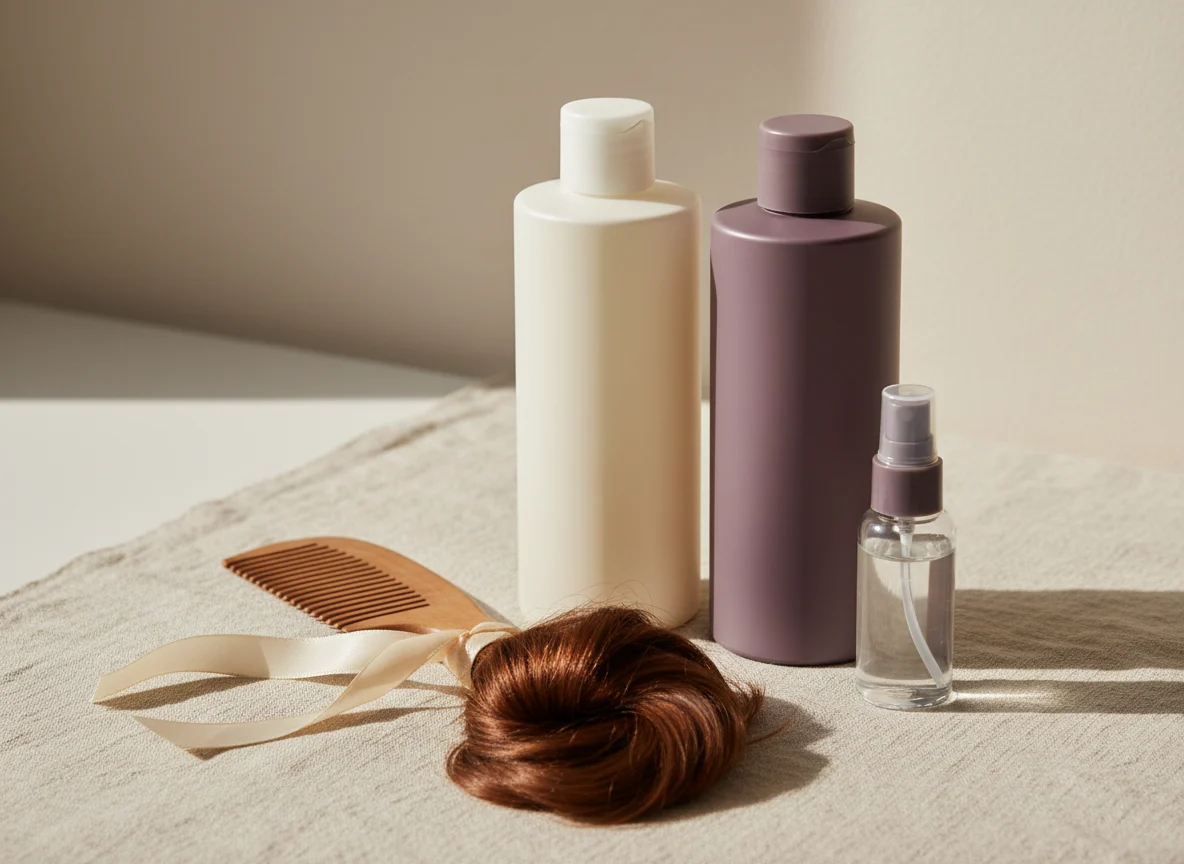
How to Keep Hair Colour from Fading: A Simple Routine for Colour-Treated Hair
You leave the salon with rich, glossy colour, and three weeks later it looks brassy, flat or a shade lighter than you paid for. Fading is normal, but how quickly it happens is largely down to what you do at home. If you have been wondering how to keep hair colour from fading, the good news is that a few small changes to washing, drying and styling make a real difference. Here is why colour fades and a simple routine to help it last longer between appointments.
Why does hair colour fade?
Permanent and semi-permanent dyes work by depositing colour molecules in and on the hair shaft. Every time the outer layer of the hair (the cuticle) is lifted, some of those molecules can escape. The main things that lift the cuticle or wear colour away are:
- Water, especially hot water. Warmth swells the hair fibre and lets colour rinse out more easily.
- Frequent or harsh washing. Strong cleansers and daily shampooing speed up colour loss.
- Heat styling. Hairdryers, straighteners and curling tongs on high settings dry the hair and dull the tone.
- Sun, chlorine and salt water. Summer holidays are famous for turning brunettes warmer and blondes yellow.
- Hard water. Mineral-rich water, common across much of Europe, can leave a dull film on hair.
Red, copper and pastel shades tend to fade fastest, while darker natural tones usually hold on longer.
How to keep hair colour from fading: a simple routine
You do not need a cupboard full of products. Focus on gentle cleansing, conditioning and protection, and stick with it for a few weeks.
1. Wait before the first wash
Many colourists suggest leaving hair unwashed for 48 to 72 hours after a colour appointment so the cuticle can settle.
2. Wash less often, and with cooler water
Two or three washes a week is plenty for most people. Use lukewarm water to shampoo and finish with a cooler rinse.
3. Choose a colour safe shampoo
A colour safe shampoo is formulated to cleanse gently so it is kinder to treated hair. Our Colour Care Shampoo, Peachy Grapefruit Zest was made for exactly this. Massage a small amount into the roots with your fingertips and let the lather run through the lengths as you rinse, rather than scrubbing the ends.
4. Condition every time
Conditioner helps smooth the surface of the hair, which makes it look shinier and feel softer. For a glossy finish on coloured lengths, try the Gloss Conditioner, Smoky Green Vetiver. If your ends are dry from bleaching or lightening, the richer Moisturising Conditioner with shea butter and argan oil is a comforting alternative. Leave it on for a couple of minutes, then rinse with cool water.
5. Dry gently and protect before heat
Squeeze water out with a soft towel or old T-shirt instead of rubbing. Mist the lengths with the Keratin Shine Leave-In Hair Mist to make detangling easier and add shine, then comb through with a wide-tooth comb. Keep the hairdryer on a medium setting, point the nozzle down the hair shaft and let hair air-dry partly when you have time.
6. Treat dry ends once a week
Coloured hair often feels drier at the tips. A few drops of Rosemary Hair & Scalp Strengthening Oil smoothed over the ends before a wash can leave them softer. Use only a little on very light or pastel shades, and shampoo it out thoroughly.
Weekly plan at a glance
| When | What to do |
|---|---|
| First 2 to 3 days after colouring | No shampoo; avoid swimming and heavy heat styling |
| Each wash (2 to 3 times a week) | Colour safe shampoo in lukewarm water, conditioner, cool rinse |
| After every wash | Leave-in mist, wide-tooth comb, gentle drying |
| Once a week | Pre-wash oil on dry ends |
| In sun or at the pool | Hat or scarf, rinse hair straight after swimming |
Everyday habits that protect your colour
- Cover up in strong sun. A hat or scarf is the simplest protection on holiday or on the ski slopes.
- Wet hair before swimming. Hair soaked with tap water absorbs less pool water. Rinse and condition as soon as you get out.
- Turn the heat down. Use straighteners and tongs at the lowest setting that works, and not every day.
When the scalp reacts to colour
Some people find their scalp feels itchy or tight for a few days after colouring. A mild option such as our Sensitive Scalp Shampoo can be used on those days, and our guide to sensitive scalp treatment has more gentle tips. Always do the patch test your colourist or dye instructions recommend. If you notice swelling, blistering, a rash spreading beyond the scalp or any strong reaction, rinse the product off and see a doctor or pharmacist straight away. And if your lengths are dry and frizzy as well as coloured, our dry, frizzy hair routine works well alongside this one.
Frequently asked questions
How long does hair colour usually last?
It depends on the type of dye and your hair. Semi-permanent colour typically fades over several washes, while permanent colour lasts until it grows out but can lose richness and tone within four to six weeks. Gentle washing and less heat help it look fresh for longer.
Do I really need a colour safe shampoo?
It is one of the easiest changes you can make. A colour safe shampoo is designed to cleanse coloured hair gently, and combined with cooler water and fewer washes it can noticeably slow down fading.
Why does my colour turn brassy?
As the cooler tones in a dye fade, the warmer orange and yellow undertones of the hair underneath show through. Sun, hard water and heat can make this happen faster. A toner or gloss at the salon can rebalance the shade.
Ready to give your colour some extra care? Explore our vegan, EU-made hair care.