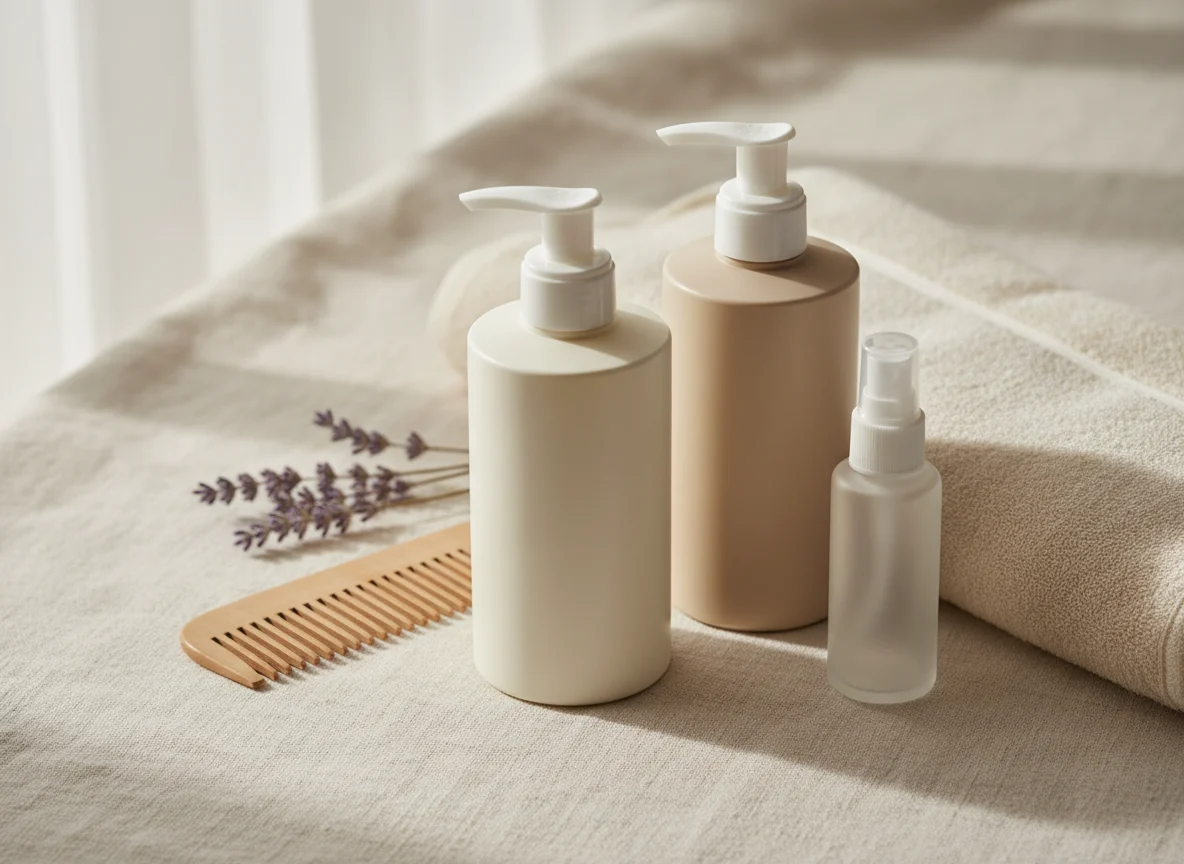
If your hair feels rough to the touch, puffs up the moment you step outside and never quite looks smooth however long you spend with a hairdryer, you are not alone. The good news is that a dry frizzy hair treatment does not have to mean a cupboard full of products. A few small changes to how you wash, condition and dry your hair can make a real difference within a couple of weeks.
Why hair gets dry and frizzy
Each hair is covered in tiny overlapping scales called the cuticle. When the cuticle lies flat, hair feels smooth, shines and holds on to moisture. When it is lifted or worn down, moisture escapes and the strand soaks up water from the air instead. That is frizz: hair swelling unevenly in humidity.
The most common causes are things most of us do every day:
- Heat styling with hairdryers, straighteners and curling tongs, especially on high settings.
- Harsh or frequent washing, which strips the natural oils that protect the lengths.
- Colouring and bleaching, which lift the cuticle so dye can get in.
- Weather: cold, windy winters, central heating and damp autumn days are a tough mix for hair across much of Europe.
- Rough towel drying and brushing when hair is wet and at its most fragile.
A hair routine for frizz, step by step
The aim of any hair routine for frizz is simple: clean gently, put moisture back, then seal it in and protect it.
1. Wash less often, and more gently
Most people with dry hair do well washing two or three times a week rather than daily. Choose a nourishing formula such as our Moisturising Shampoo with shea butter, and focus it on your scalp, where oil and build-up collect. The lather that runs through your lengths as you rinse is enough to clean them.
If your scalp also feels tight or itchy, a mild option like the Sensitive Scalp Shampoo may suit you better. Persistent itching, flaking or redness can have a medical cause, so see a doctor or pharmacist if it doesn’t settle.
2. Never skip conditioner
Conditioner is where most of the smoothing happens. After shampooing, squeeze out excess water and apply a generous amount of Moisturising Conditioner with argan oil from mid-lengths to ends. Comb it through with a wide-tooth comb, leave it for two or three minutes, then rinse with cooler water. If you prefer a glossier finish or a different scent, the Gloss Conditioner, Smoky Green Vetiver is a lovely alternative.
3. Dry with care
Rubbing hair with a towel roughs up the cuticle. Instead, gently squeeze water out with a soft cotton T-shirt or microfibre towel. Let hair air-dry to around 70 per cent before using a hairdryer, keep it on a medium heat and point the nozzle down the length of the hair, from root to tip.
4. Use a leave-in conditioner
A leave-in conditioner is the step many people miss, yet it often makes the biggest visible difference. A light mist on damp hair helps detangle, smooth and add shine without weighing hair down. Our Keratin Shine Leave-In Hair Mist is designed for exactly this: spray it over towel-dried lengths, comb through and style as usual.
5. Treat your ends once a week
For very dry or brittle lengths, a weekly oil treatment works well. Warm a few drops of Rosemary Hair & Scalp Strengthening Oil between your palms and smooth it over your ends, either for an hour before washing or as a tiny amount on dry hair to tame flyaways. You can read more about using it in our guide to rosemary oil for hair.
6. Clear build-up now and then
Styling products and hard water can leave build-up that dulls hair. Every week or two, use the Deep Cleanse Scalp Scrub, Rosemary & Mint before shampooing to refresh the scalp, then follow with your usual conditioner on the lengths.
Everyday habits that reduce frizz
- Sleep on a silk or satin pillowcase, or loosely plait long hair before bed to reduce friction.
- Turn the heat down on straighteners and give hair a few heat-free days each week.
- Get regular trims. Split ends travel upwards and make hair look frizzier; a trim every 8 to 12 weeks keeps them in check.
- Protect hair in bad weather with a scarf or hat in wind and rain, just as you would adjust your winter skincare routine for your skin.
Your weekly dry frizzy hair treatment plan
| When | What to do |
|---|---|
| Wash days (2 to 3 a week) | Moisturising shampoo on the scalp, conditioner on the lengths, leave-in mist on damp hair |
| Non-wash days | Light mist of leave-in on the ends to refresh and smooth |
| Once a week | Hair oil treatment on the ends before washing |
| Every 1 to 2 weeks | Scalp scrub before shampooing |
Give any new routine three or four weeks; most people notice softer, calmer lengths well before then.
Frequently asked questions
What is the best dry frizzy hair treatment?
No single product fixes frizz on its own. The best results come from a combination: a gentle moisturising shampoo, a conditioner on every wash, a leave-in conditioner on damp hair and less heat. Together, these help keep the hair’s outer layer smooth and hold moisture in.
Should I use a leave-in conditioner every day?
You can. A light leave-in mist is gentle enough for daily use, either after washing or to refresh dry ends between washes. If your hair starts to feel heavy, use it every other day or only on the ends.
Can dry, frizzy hair be a sign of a health problem?
Usually it is down to styling, washing and weather. However, sudden changes in hair texture, or dryness along with hair loss or an itchy, flaky scalp, can sometimes have a medical cause. If you are worried, see a doctor or pharmacist.
Ready to give your hair some care? Explore the JavaPlums hair care collection.