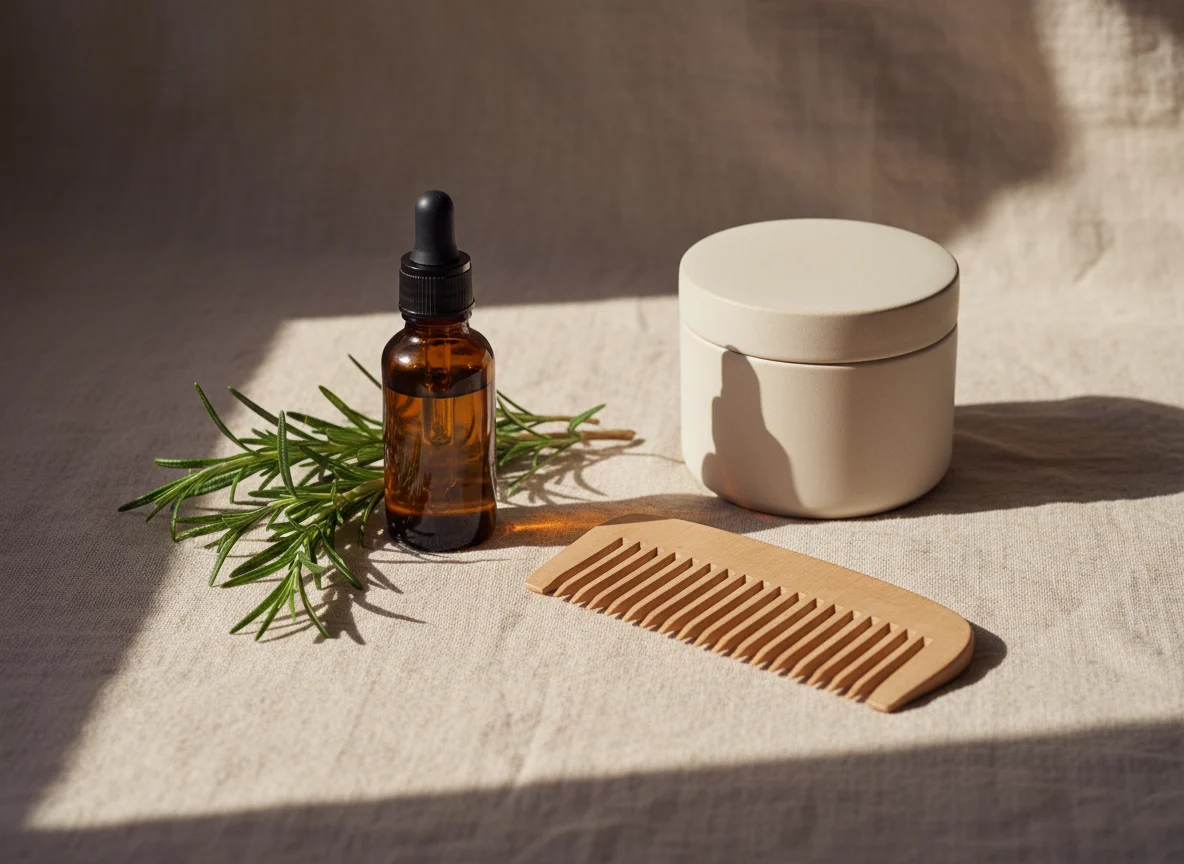
Rosemary oil for hair has gone from a kitchen-cupboard curiosity to one of the most talked-about hair care rituals in Europe. Scroll through any beauty feed and you’ll find someone massaging a few drops into their scalp before bed. But does rosemary oil for hair growth actually do anything, or is it simply a pleasant-smelling habit? Here’s an honest look at what we know, what we don’t, and how to use a scalp oil sensibly.
Why is everyone talking about rosemary oil for hair?
Rosemary has been used in European herbal traditions for centuries, particularly around the Mediterranean, where it grows wild. Its recent popularity comes from a mix of social media enthusiasm and a handful of small studies suggesting that rosemary may support the scalp environment in which hair grows.
It also appeals because it feels simple and natural: a few drops, a gentle massage, and a few quiet minutes of self-care.
What does the research actually say?
The evidence is promising but limited. The study most people quote is a small trial from 2015, which compared rosemary oil with a low-strength conventional hair loss treatment over six months. Both groups saw a similar improvement in hair count, and the rosemary group reported less scalp itching. Laboratory work also suggests rosemary may have a mild effect on circulation and on the scalp’s natural balance.
However, a few things are worth keeping in mind:
- The studies are small, and results in a trial don’t guarantee the same results for everyone.
- Changes, where they happen, take months rather than weeks. Hair grows roughly one centimetre a month.
- Rosemary oil is not a treatment for medical hair loss. Sudden shedding, bald patches or thinning alongside other symptoms deserve a proper check, so please see a doctor or pharmacist.
In short: rosemary oil is a reasonable, low-cost addition to a healthy scalp routine, with realistic expectations. Think of it as care for your scalp and lengths rather than a miracle cure.
Why scalp health matters for hair growth
Healthy hair starts at the scalp. A scalp that is clogged with product build-up, very dry or irritated is not the most comfortable environment for hair. That’s why the best rosemary oil routines usually combine three things: gentle cleansing, occasional exfoliation and regular nourishment.
If your scalp tends to be reactive, the same principles we use for faces apply. Our sensitive skin care routine explains how to spot triggers and keep things gentle, and much of that advice works for the scalp too.
How to use rosemary oil for hair growth: a simple routine
1. Massage in a scalp oil two or three times a week
Part your hair into sections and apply a few drops of a ready-blended scalp oil, such as our Rosemary Hair & Scalp Strengthening Oil, directly onto the scalp. Massage with your fingertips (not your nails) in small circles for two to three minutes. Smooth any leftover oil through dry ends. Leave it on for at least an hour, or overnight with an old pillowcase.
Avoid applying undiluted rosemary essential oil straight from a bottle. Essential oils are concentrated and can irritate the skin, which is why a blended oil designed for the scalp is the easier choice.
2. Exfoliate the scalp once a week
Dry shampoo, styling products and natural oils can build up on the scalp over time. A weekly scrub helps lift that away so your scalp feels fresh. Our Deep Cleanse Scalp Scrub, Rosemary & Mint pairs naturally with a rosemary oil routine and leaves a cool, tingly finish. Apply to a damp scalp, massage gently, then rinse well.
3. Wash with a gentle shampoo
After an oil treatment, you may need to shampoo twice to remove everything. Choose something mild so you don’t undo the good work. For itchy or easily irritated scalps, try the Sensitive Scalp Shampoo. If your main concern is dry, brittle lengths, the Moisturising Shampoo with shea butter and argan oil is a comforting option.
4. Condition and protect your lengths
Growth is only half the story; keeping the hair you have strong matters just as much. Breakage makes hair look thinner and shorter than it really is. Follow with the Moisturising Conditioner on mid-lengths and ends, and finish with a light spritz of Keratin Shine Leave-In Hair Mist to help detangle without tugging.
Tips for getting the most from your routine
- Be consistent. Give it at least three months before judging the results, and take a photo at the start so you can compare fairly.
- Patch test first. Apply a little oil behind your ear and wait 24 hours, especially if you have sensitive skin.
- Be gentle. Tight hairstyles, rough towel-drying and very hot tools all add stress to your hair.
- Look after yourself. Sleep, stress and a balanced diet all show up in your hair. Ongoing or sudden changes are worth discussing with a doctor or pharmacist.
Looking for a thoughtful present for someone who loves a hair ritual? A scalp oil and scrub duo features in our skincare gift ideas for Christmas.
Frequently asked questions
How long does rosemary oil take to work on hair?
Be patient. Most people who notice a difference do so after around three to six months of regular use. Your scalp may feel fresher and your ends softer much sooner, though.
Can I leave rosemary oil in my hair overnight?
Yes, a blended scalp oil can be left on overnight and washed out in the morning. If your scalp is sensitive, start with an hour or two and see how it feels.
Is rosemary oil suitable for every hair type?
Generally, yes. Fine hair may feel weighed down, so use fewer drops and focus on the scalp rather than the lengths. If you’re pregnant, breastfeeding or have a scalp condition, check with a doctor or pharmacist before starting.
Ready to start your scalp ritual? Explore our natural hair care collection.